

September 5, 2026
Read Case
Preserving Retrieval Vectors Across Multi-Year Cycles
When completed-project materials are stored without systematic descriptive tags, finding essential files becomes an expensive investigative ordeal. Structured metadata transforms inert digital deposits into accessible intelligence, ensuring seamless project ownership changes and rock-solid long-term document organization across dynamic organizations.
87% Faster
Asset Retrieval Efficiency
ISO 23081
Records Taxonomy Standard
100% Traceable
Cryptographic Provenance
Zero Data Loss
Contextual Continuity
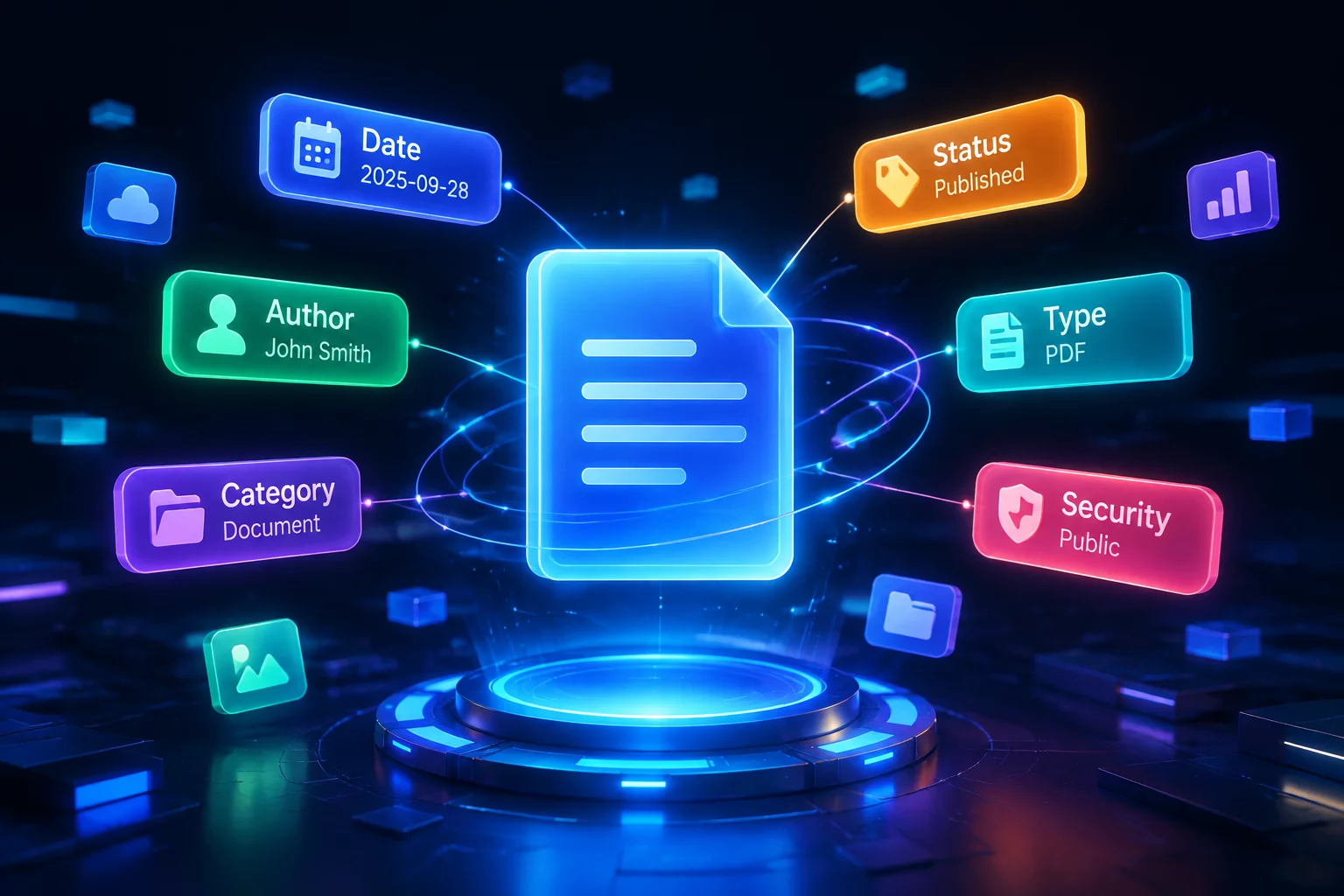
Interactive visual mapping of interconnected metadata properties across project archive nodes.
FIG-META-409
1
Foundational Schema
Defining the Core Descriptive Architecture
Digital records without descriptive headers are little more than isolated byte streams on a server drive. Every digital asset must carry immutable core attributes: creator identity, creation milestone, original software environment, and primary project scope. Without these markers, indexing tools fail to categorize project archive organization accurately.
Teams frequently rely on folder paths to encode meaning, yet directory trees inevitably collapse during server migrations and cloud reorganizations. Standardized schema attributes embedded directly within file headers or sidecar manifests preserve organizational memory even after local storage hierarchies dissolve.
- Enforce mandatory technical metadata including file format version, encoding standard, and SHA-256 hash checksums.
- Mandate administrative ownership tags to trace completed-project materials across departmental reorganizations.
Operational Protocol
Standardize Your Archival Decision Framework
Discover how structured governance frameworks establish unambiguous ownership rules and uniform categorization across multi-disciplinary teams.
2
Context Preservation
Capturing Decision Rationale and Project Lineage
Raw documents capture outcomes, but metadata captures intent. When teams review legacy deliverables years later, understanding why a specific architecture or vendor was chosen prevents repeating obsolete debates and costly mistakes.
Linking deliverables to corresponding milestone briefs and meeting logs provides essential context. This continuous trail prevents confusion during project ownership changes when new leadership assumes stewardship of historical repositories.
Archival Insight
A file named 'final_deck_revised.pdf' without metadata tells no story. Adding project phase, author affiliation, and sign-off status turns it into verified historical intelligence.
Preserving decision context within long-term document organization guarantees that future audits and strategic reviews proceed without ambiguity or lost institutional knowledge.
3
Automated Ingestion
Integrating Metadata Extraction into Pipeline Routines
Manual tagging consistently breaks down when project closeout sprints accelerate. Automated ingestion routines extract EXIF information, document properties, and repository commit hashes at the exact moment files transition into the central repository.
Automated pipelines validate each package against corporate taxonomy rules before finalizing storage allocations. Files missing mandatory fields trigger automated notifications to ensure complete record sets.
- Automated validation of cryptographic hashes and sidecar XML manifests upon archival deposit.
- Continuous taxonomy synchronization across multi-departmental storage silos and cloud buckets.
4
Lifecycle Auditing
Maintaining Metadata Integrity Over Decades
Formats degrade, software environments change, and terminology shifts over time. Regularly auditing archival metadata verifies that references remain valid, checksums match original states, and categorization maps to contemporary retrieval models.
Periodic automated audits ensure project archive organization remains resilient against data bit-rot and administrative drift, guaranteeing frictionless access whenever historical data must be retrieved.
Archival Reference
Frequently Asked Inquiries on Metadata
Further Case Records
Browse Full Archive
Related Archive Articles


Peer Commentary
Active Thread
Archival Review Debriefs
Submit Archival Feedback
Contribute your analysis to this project record preservation log.
To leave a comment, please log in to your account.
User1
Great tips! Establishing standardized metadata schemas before closing out projects has completely solved our team's search bottlenecks.