
Sep 01, 2026
Read Case
Operational Context & Core Metrics
A resilient project archive organization does not happen automatically through software alone. It requires structured training that teaches contributors how to categorize completed-project materials, handle project ownership changes seamlessly, and maintain long-term document organization without breaking sprint speed.
92%
Asset Recovery Rate
Zero Data Gaps
During Staff Handoffs
14 Days
Post-Close Archive Window
100%
Metadata Compliance

Interactive team training on archival cataloging, repository restructuring, and index hygiene.
MODULE #ARC-7-CUR
1
Foundational Phase
Overcoming Documentation Friction
Most contributors view documentation as secondary overhead rather than essential architecture. When training new or existing staff, start by demonstrating how missing records directly waste development cycles, cause duplicate work, and make project ownership changes chaotic.
Show teams that project archive organization is not about writing endless essays, but about capturing critical decision branches and cataloging completed-project materials with predictable tags so subsequent squads find what they need in seconds.
- Demonstrate retrieval time differences between tagged repositories and unindexed raw folders.
- Establish minimal required fields per artifact so documentation never turns into unmanageable toil.
Archival Governance
Need an Action Plan for Transitioning Project Records?
Review our structured guides on managing ownership transitions and locking final versions before team redeployment.
2
Standardization Stage
Embedding Archival Steps into Routine Workflows
Training succeeds only when documentation rules integrate directly into daily project tools. Instead of leaving archiving for the very end of an initiative, train teams to log key architecture records alongside sprint milestones.
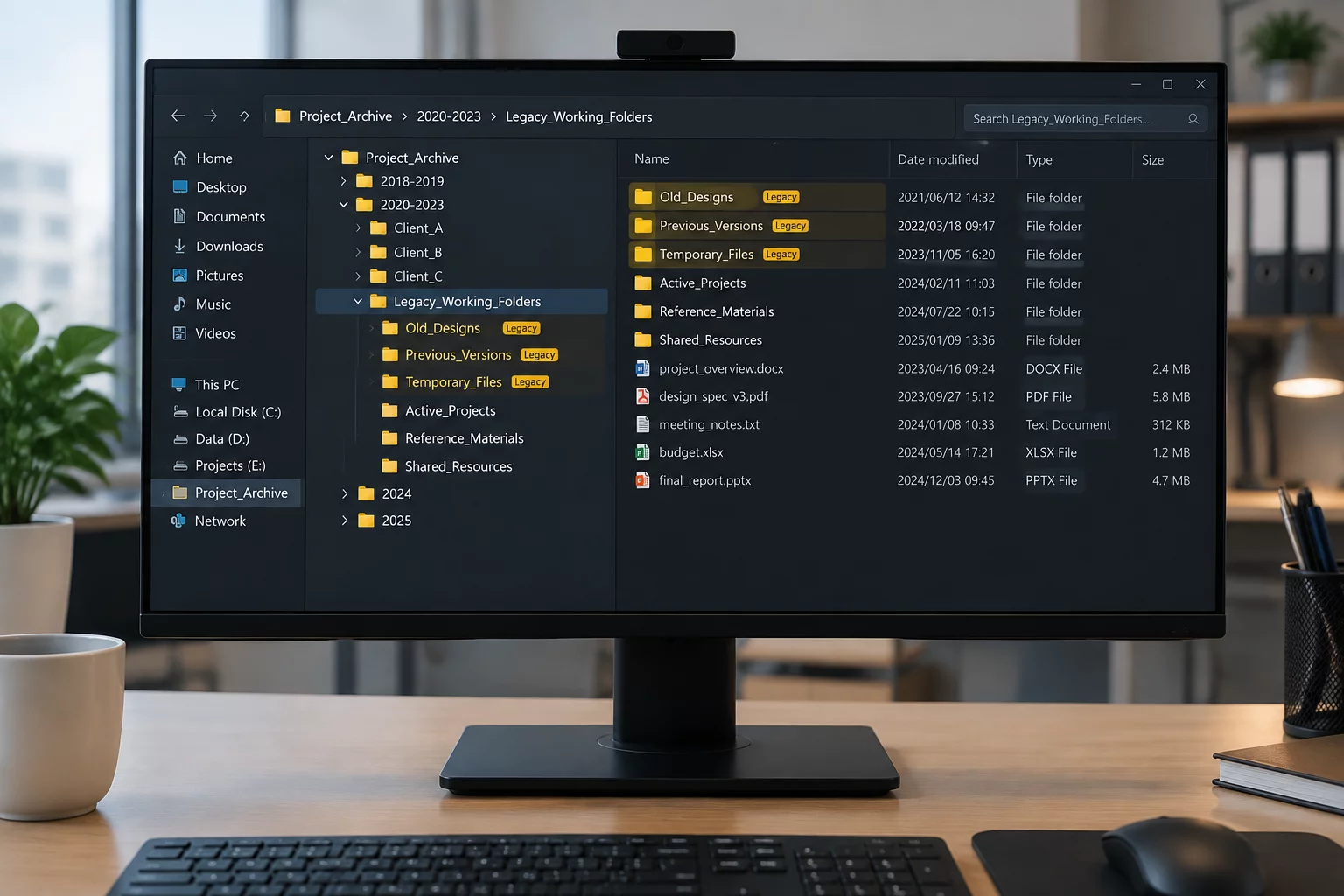
Standardize folder hierarchies and enforce naming conventions across cloud drives and repository stores. Teams should know where to locate briefs, decision matrixes, and final export bundles without relying on direct messages.
Archival Golden Rule
No project workspace is officially archived until all temporary folders are removed and completed-project materials are locked in read-only storage with signed-off metadata.
This strict boundary prevents orphaned working drafts from masquerading as canonical releases during later audits or organizational reviews.
3
Simulation Drills
Rehearsing Ownership Handover Scenarios
Conduct tabletop handover exercises where team members swap responsibility for maintaining a foreign project archive. If the new lead cannot locate license agreements, original build assets, or deployment logs within 15 minutes, the documentation fails the test.
These exercises reveal blind spots in long-term document organization before real personnel reassignments happen. They teach teams to write with future unfamiliar readers in mind.
- Assign mock retrieval challenges to test deep directory indexing and clarity of readme files.
- Review access control lists to guarantee that archive keys do not terminate when a lead departs.
4
Maintenance Cadence
Sustaining Continuous Knowledge Retention
Training is not a one-time onboarding milestone; it requires regular quarterly reviews. Designate revolving archival stewards in each squad to review index hygiene, update stale links, and decommission abandoned temporary directories.
When long-term document organization is reinforced through regular praise and practical retrospectives, project archive organization transforms from an unwanted chore into an established competitive advantage.
Practical Answers
Frequently Asked Training Questions
Archival Index
Browse Full Archive


Archival Review Debriefs
Submit Archival Feedback
Contribute your analysis to this project record preservation log.