
Aug 15, 2026
Read Case
The Departure Vulnerability in Project Archives
When a veteran lead project manager resigned after three continuous years directing a cross-functional digital initiative, the corporate handover window lasted merely four business days. While the high-level delivery boards appeared green, deep file hierarchies, vendor accounts, and crucial decision records remained tied to a single user account. This investigation reveals how structured project ownership changes and proactive project archive organization prevent completed-project materials from turning into orphaned digital silos during managerial transitions.
4 Days
Handoff Window
142 Assets
Orphaned Permissions
100%
Material Recovery
6 Protocols
Governance Rules

Documented asset handover ledger and cloud permission transfers during transition.
CASE-ST07-DEBRIEF
1
Phase I: Initial Assessment
The Sudden Notice and Unmapped Cloud Directories
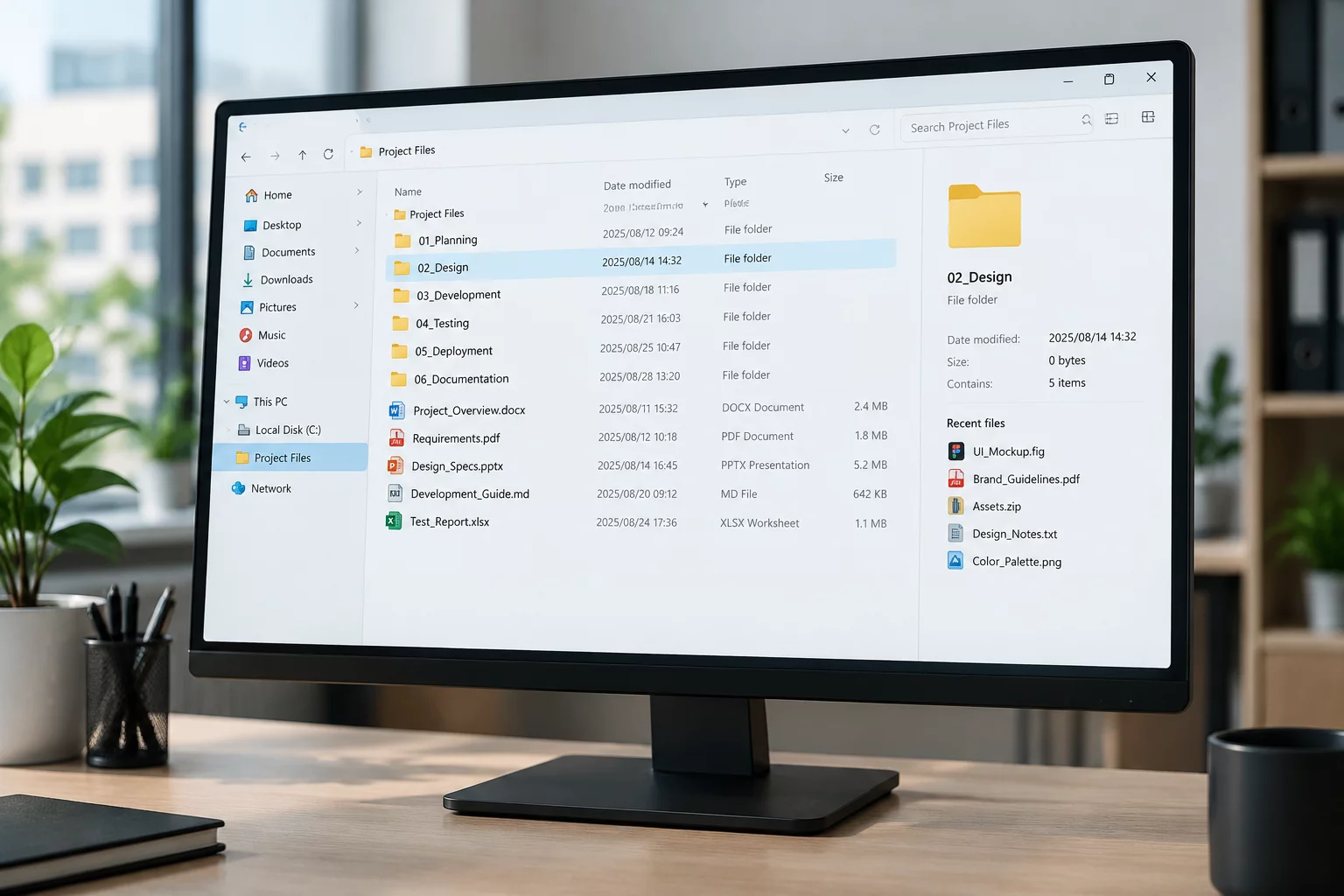
The technical team received the departure notice on a Friday morning, triggering an immediate race against the enterprise offboarding calendar. While sprint tracking boards and major milestones were visible in Jira, hundreds of core project assets, vendor specifications, and intermediate design assets existed exclusively inside personal drive folders that had never undergone systematic project archive organization.
Without an institutional catalog, completed-project materials often remain sequestered in personal cloud accounts. When security systems deactivate departing credentials, team members instantly lose access to vital reference documents, baseline budget records, and architectural decisions.
- Personal workspace drives lacked shared workspace permissions and universal indexing tags.
- Third-party software licenses and vendor communications were tethered to individual email profiles.
Framework Guide
Standardize Project Manager Handoffs Before Departures Occur
Explore our actionable checklist on establishing shared vault hierarchies, access reassignments, and permanent metadata indexing.
2
Phase II: Incident Discovery
Unraveling Fragmented Access and Missing Decision Trails
Three weeks following the manager's departure, a major regression incident emerged in the authentication sub-system. When engineers attempted to inspect the original architectural trade-off document, they hit a digital roadblock: the primary specification was stored on a detached personal drive that had been archived upon credential expiration.
Automated security revocation routines had locked the entire sub-tree. Even though the raw data remained on corporate storage clusters, secondary contributors could neither modify permissions nor transfer editing rights without extensive administrator clearance.
The Archival Breakdown
A project repository without structured organizational ownership turns every personnel transition into an institutional memory blind spot. Completed-project materials must be assigned to collective department vaults before credentials cycle.
This incident revealed that project ownership changes cannot rely solely on quick calendar meetings. They require rigorous digital asset audits, file ownership transfers, and contextual decision documentation.
3
Phase III: Remediation Sprint
Restructuring Ownership and Rebuilding the Central Ledger
The engineering operations squad initiated a focused recovery sprint. Working in direct tandem with system administrators, they inventoried all disconnected personal project folders, mapped asset dependencies, and re-assigned root ownership to shared functional accounts.
Rigorous long-term document organization standards were deployed across the organization. Every closed sprint now enforces clean file nomenclature, version deduplication, and direct archiving into permanent repositories.
- Automated migration of project assets from personal employee drives to shared departmental vaults.
- Mandatory offboarding checklists requiring sign-off on asset handovers, key credentials, and decision registries.
4
Phase IV: Long-Term Governance
Sustainable Institutional Memory and Proactive Archiving
Institutional memory should never hinge on an individual employee's presence or personal drive structure. By transitioning from localized document creation to institutional project archive organization, the team created a resilient operational baseline that withstands sudden staff turnover.
Whenever a project milestone concludes, a standardized archive package is generated containing finalized deliverables, architectural context notes, vendor contacts, and license details. Successors stepping into existing projects can locate verified historical records within minutes instead of searching through fragmented silos.
Archival FAQ
Questions on Managerial Transitions & Asset Preservation
Case Records
Browse Full Archive
Related Archival Case Studies

Peer Commentary
Active Thread
Archival Review Debriefs
Submit Archival Feedback
Contribute your analysis to this project record preservation log.
To leave a comment, please log in to your account.
No comments yet. Be the first to leave a comment.