
2026-07-10
Read Case
Custodianship Transfer and Continuity Framework
When project ownership changes without formal transition gates, critical context evaporates. This decision guide establishes repeatable procedures for designating primary stewards, revoking orphaned permissions, cataloging living repositories, and auditing transferred materials to maintain institutional memory over years of operational evolution.
100%
Repository Custody Verification
4 Phases
Standardized Handover Flow
Zero Leak
Orphaned Permission Target
30 Days
Post-Handoff Observation

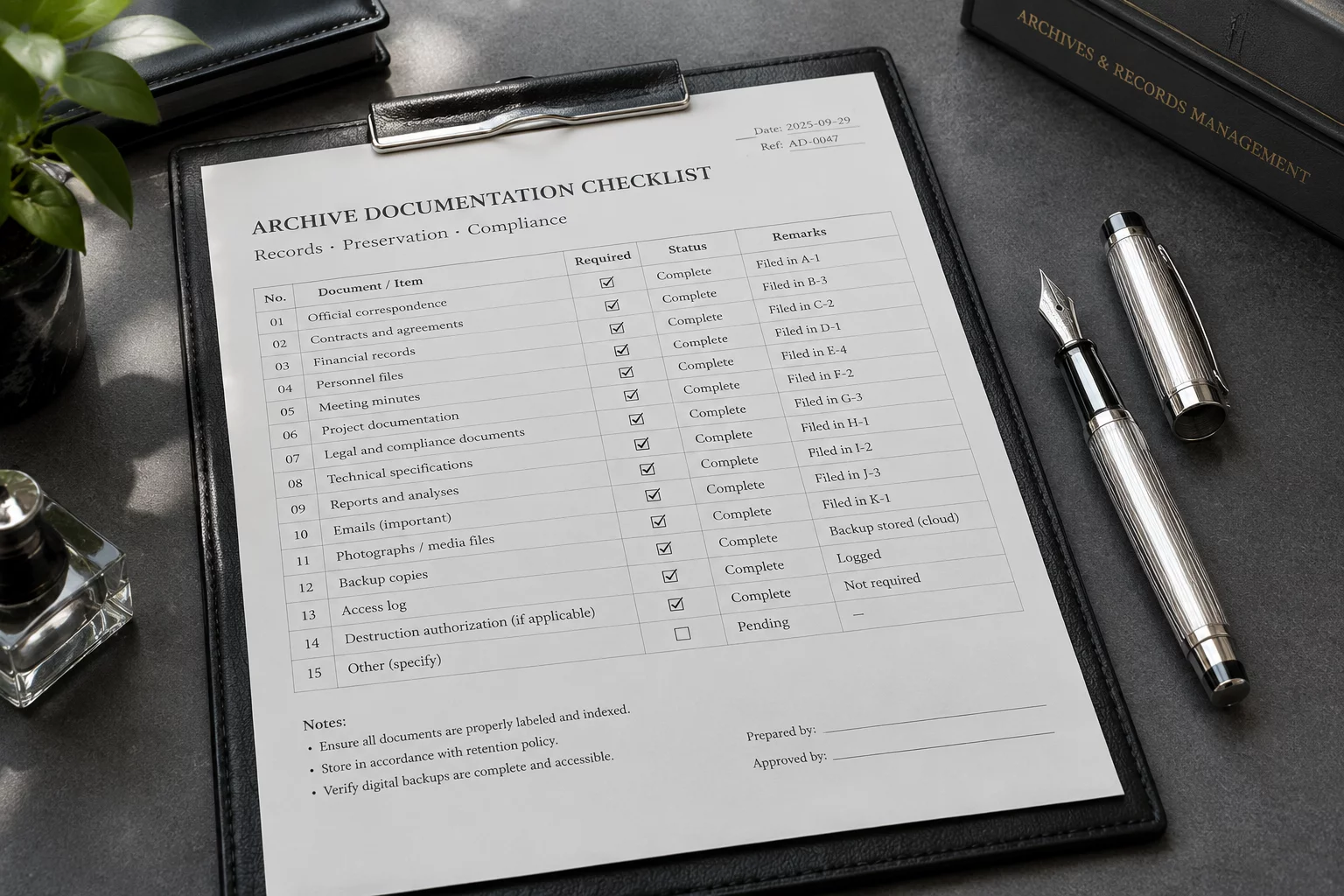
Executive handoff session formalizing file ownership and digital asset custody transfer.
DECISION // PROTOCOL-02
1
Phase 1: Discovery
Auditing Repositories and Workspace Footprints
Before initiating any personnel changes, project leads conduct a complete audit of every digital environment linked to the initiative. This discovery phase maps primary cloud drives, third-party collaboration boards, staging servers, and localized storage caches created during active sprints.
Teams frequently discover shadow storage areas where vital project files were duplicated or modified in isolation. Cataloging these locations prevents unexpected asset loss once original accounts are modified or deactivated.
- Compile an exhaustive inventory of shared drives, code branches, and design boards.
- Identify all primary administrators, secondary editors, and automated integration tokens.
Operational Guidance
Need structured handoff workflows for your enterprise teams?
Explore our complete decision base covering archive structuring, permission tiers, and post-project audit protocols.
2
Phase 2: Context Capture
Documenting Decision Logic and Architectural Rationale
Files alone do not explain why specific technical or design tradeoffs occurred. Outgoing owners formulate decision log summaries that detail known constraints, vendor nuances, and unresolved dependencies.
Without recorded rationale, succeeding teams often repeat rejected experiments or misinterpret historical compromises. The outgoing custodian writes structured context records in central repository manifests.
Mandatory Custody Record
Every project folder must include a single index document listing the date of transfer, incoming steward name, historical milestone markers, and approved archive status.
Place these documentation manifests directly in root archive trees so subsequent audits immediately locate ownership history.
3
Phase 3: Access Reassignment
Reallocating Administrative Roles and Revoking Orphaned Tokens
Security risks rise whenever permissions linger across former team members. The administrative transfer reassigns root ownership of cloud subscriptions, repository master branches, and API keys to the new custodian.
Shared generic accounts must be eliminated in favor of role-based credentials. All previous individual write permissions are converted to read-only archival tiers or completely revoked.
- Transfer primary administrator status to verified successor personnel.
- Rotate all system credentials and invalidate obsolete developer tokens.
4
Phase 4: Sign-off & Observation
Joint Verification and the 30-Day Continuity Review
Transition concludes with a formal sign-off checkpoint where both incoming and outgoing stewards verify full access to core deliverables. Incoming stewards test live builds, query document repositories, and validate backup integrity.
A thirty-day observation window ensures that unexpected workflow gaps or missing external assets are surfaced and resolved while historical knowledge remains accessible.
Common Inquiries
Transition Protocol Questions and Answers
Related Playbooks
Browse Full Decision Base



Archival Review Debriefs
Submit Archival Feedback
Contribute your analysis to this project record preservation log.