
2026-07-10
Read Case
Lifecycle Audit Framework Overview
When major work streams conclude, temporary collaboration folders frequently remain scattered across cloud drives and local repositories. A structured post-project material audit establishes an immutable record of deliverables, removes ephemeral drafts, and guarantees long-term retrieval compliance for cross-functional stakeholders.
99.4%
Asset Retrieval Rate
Zero
Unassigned Repositories
14 Days
Standard Audit Window
ISO-compliant
Audit Trail Standard

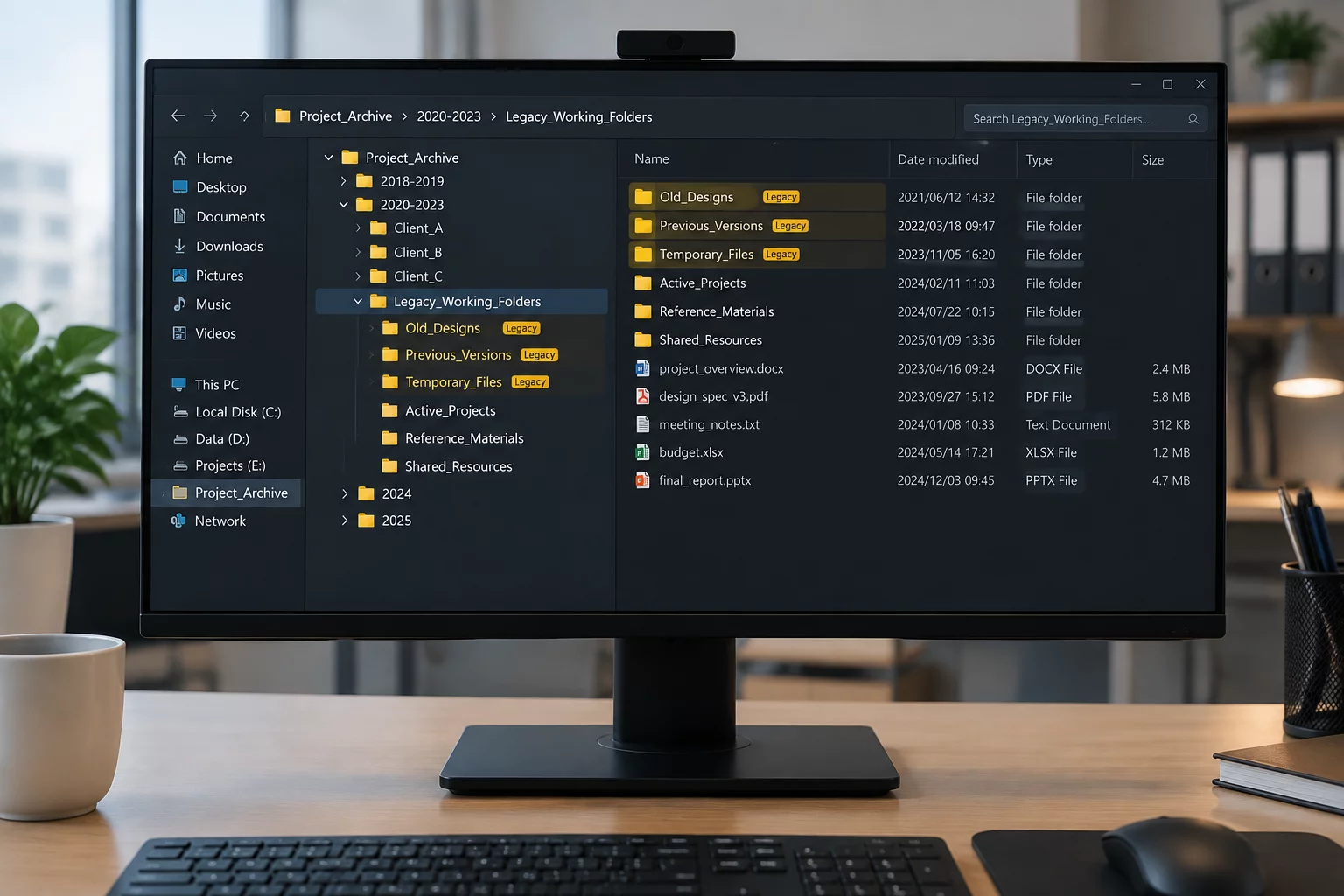
Auditing spreadsheet manifests against finalized project repository branches and asset registries.
AUDIT-SPEC-909
1
Stage 01: Inventory Discovery
Scanning Repositories and Temporary Shared Drives
Project teams rapidly spawn auxiliary workspaces, draft boards, and isolated storage buckets during intense production cycles. Discovery begins by gathering full manifests from version control systems, shared cloud directories, and chat channels.
Every discovered folder must be cataloged with origin metadata, including the lead creator, creation timestamp, and primary deliverable association before any clean-up occurs.
- Run automated directory indexing across active file servers to log file extension counts and modification intervals.
- Flag unassigned working directories and orphaned branch builds for verification by the departing project manager.
Advisory & Implementation
Need an Institutional Audit Protocol?
Consult with our archival specialists to establish clear retention workflows and deprecate stagnant collaboration hubs seamlessly.
2
Stage 02: Verification & De-duplication
Consolidating Milestone Releases and Canonical Assets
Teams often generate iterative files labeled with arbitrary naming suffixes like 'v2_final_approved'. Auditors compare cryptographic hashes and revision stamps to isolate true source documents from disposable review copies.
Deprecating duplicates eliminates cognitive load for future teams who might search the archive months or years later.
Critical Verification Checkpoint
Never delete working drafts containing unique client feedback notes without first extracting the decision log into the central milestone summary.
Once redundant files are purged, canonical deliverables are bound to their respective metadata tokens.
3
Stage 03: Access Control & Permissions
Locking Permissions and Transitioning Ownership
Completed projects must not remain editable by wide collaborator pools. Leaving write permissions active exposes static project history to accidental modifications or unsanctioned overwrites.
Auditors transition all assets to read-only archival permissions and reassign primary repository governance to designated department curators.
- Revoke guest, external contractor, and temporary collaborator access credentials.
- Establish persistent read-only permissions for organizational search indexing.
4
Stage 04: Archival Indexing
Publishing the Master Archival Catalog
The audit concludes with the publication of a standardized index manifest stored in the permanent knowledge repository. This record identifies contract milestones, core team rosters, technology stacks, and direct location pointers.
Future maintenance teams and compliance officers can instantly verify the origin of any asset without contacting former team contributors.
Frequently Asked Questions
Post-Project Material Audit Inquiries
Institutional Records
Browse Full Archive


Archival Review Debriefs
Submit Archival Feedback
Contribute your analysis to this project record preservation log.